

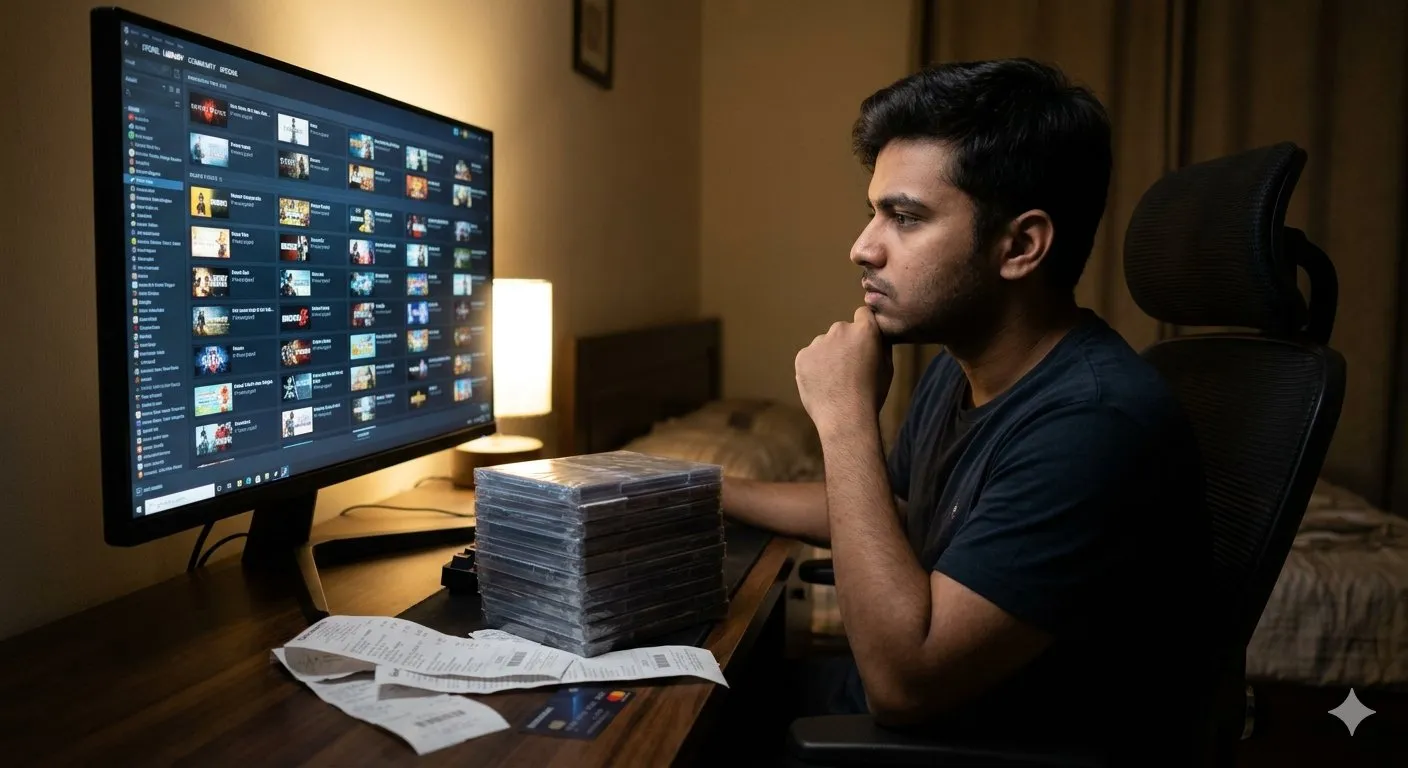
A discount notification appears just as payday arrives. The game looks interesting, the price seems manageable, and the purchase takes seconds. Months later, it is still untouched. This familiar cycle explains why a modest gaming budget can disappear without delivering much entertainment. Tools such as dealshub can help people explore offers, yet a price comparison is only useful after deciding what deserves a place in the library. The bigger question is how to tell a genuine future favorite from another forgotten bargain.
The Backlog Is a Financial Record
Most players think of a backlog as a list of adventures waiting to happen. It can also reveal how past spending decisions turned out. Scroll through recently purchased games and note which ones received meaningful playtime. A pattern may emerge: perhaps strategy titles are finished regularly while multiplayer releases are abandoned after a weekend. That information can help shape future purchases. It is more reliable than assuming every critically acclaimed game will suit the owner’s personal habits or schedule under ordinary buying conditions.
Discounts Change Our Sense of Value
A large percentage reduction creates urgency even when the final price is not particularly low. Advertisements tend to emphasize what a shopper supposedly saves, not what the shopper actually spends. Reframing the decision helps: would the game still be appealing if its discount percentage were hidden? If not, the offer may be driving interest more than the experience itself. A purchase should be judged against free time, enjoyment, and current priorities rather than against an attractive comparison with an earlier price.
Make Room for the Games Already Owned
Before buying another open-world adventure, consider whether an unfinished one could satisfy the same interest. Returning to an installed game costs nothing extra and may reveal a title that simply arrived at a busy time. Set aside one evening for an old favorite or a neglected purchase. If it still fails to hold attention, there is no obligation to finish it. The point is to make new spending intentional instead of automatically treating the next release as the next source of entertainment.
Use a Wishlist as a Cooling Period
A wishlist turns an immediate purchase into a decision that can be revisited. Add a game after seeing a trailer, then wait until there is a realistic opportunity to play it. Over time, some entries will remain appealing while others lose their pull. That change is useful information, not a missed opportunity. A wishlist also helps separate urgent purchases for planned group sessions from solitary games that can be explored later. Buying deliberately becomes easier when every notification is not treated as a deadline.
Compare the Version You Would Actually Use
An expensive edition can feel more attractive when heavily discounted, but added content often has little value for someone who will only play the main campaign. Check whether a deluxe package includes missions, expansions, digital extras, or purely cosmetic items. Assess each component separately. In some cases, an inexpensive base game is enough; in others, a complete bundle avoids later purchases. What matters is the intended experience, not the edition with the most impressive title or marketing artwork in practice.
Plan Spending Around Real Playtime
Rather than imposing a strict rule on the number of games owned, look at the hours realistically available each month. Someone balancing work, study, and family may enjoy one substantial title more than five new releases. A player who regularly completes shorter games has different needs. Budgeting should reflect those differences. Even free offers consume attention and storage space, so acquiring everything available is not automatically beneficial. A smaller library can provide a better experience when it matches how someone actually plays.
Make Room for Enjoyment, Not Guilt
A good purchasing strategy is not about refusing every sale or turning leisure into accounting homework. Games are meant to be enjoyable, and spontaneous purchases sometimes lead to memorable discoveries. The aim is to reduce predictable regret. Leave a small discretionary amount for experiments while keeping major purchases deliberate. When an unfamiliar indie game genuinely sparks curiosity, a reasonable price can justify trying it. When the motivation is only fear of missing a promotion, walking away often feels better later.
Conclusion
The most effective way to control gaming expenses is to measure purchases against interest and available time rather than discount size alone. A backlog, a realistic monthly budget, and a carefully maintained wishlist can reveal which offers deserve attention. Comparing prices remains helpful, but it cannot decide what someone will enjoy. DealsHUB can be part of a thoughtful shopping routine by helping players explore available offers. Ultimately, a smaller collection of well-chosen games may deliver more satisfaction than shelves of untouched digital purchases.