

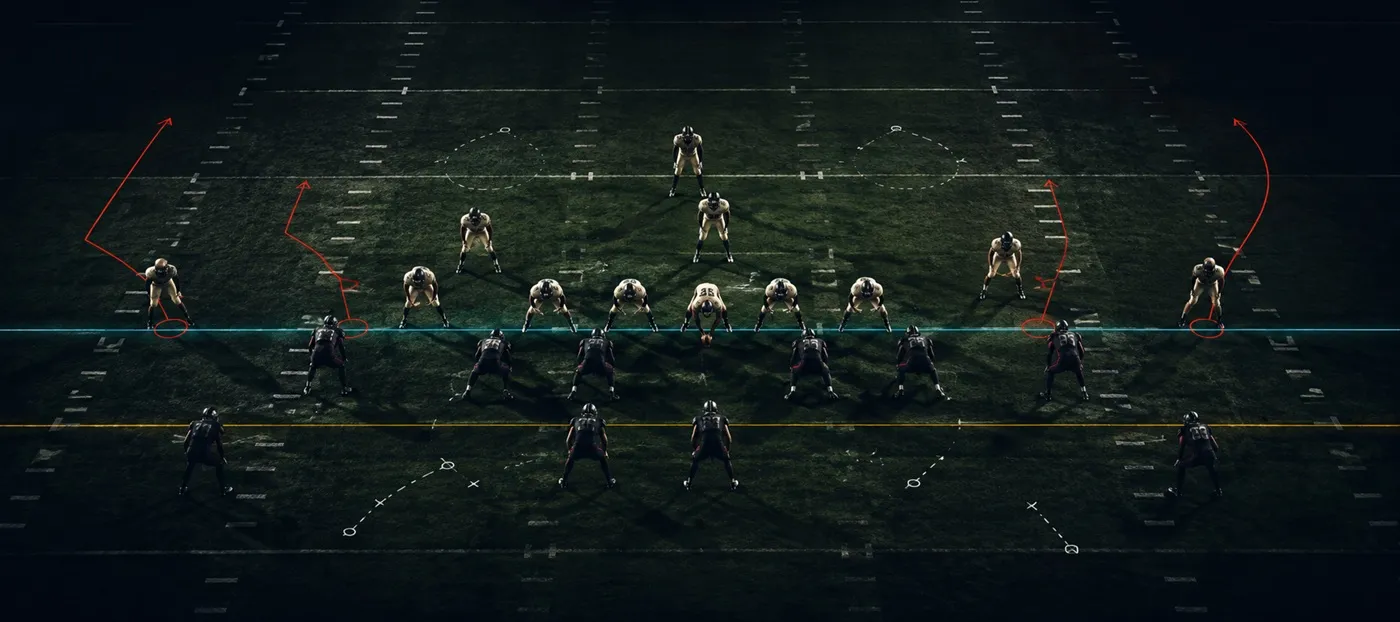
Watching American football becomes easier when a fan understands why a play was called, what each player was trying to accomplish, and how the defense changed the result. Television often shows the outcome quickly, but it does not always make the decision-making process obvious. A football strategy simulator can slow that process down and turn one snap into a learning exercise. Instead of memorizing formations or route names, the user can see how alignment, down and distance, coverage, blocking, and player reads connect.
Football Strategy Is Situational
A play that makes sense on first-and-10 may be a poor choice on third-and-short. Field position, score, personnel, time remaining, and the defense’s structure all affect the decision.
This is why learning isolated plays is only the beginning. Inside Zone is not simply “run the ball up the middle.” The line follows zone-blocking rules while the runner reads how defenders fit the play. Slant-Flat creates a different problem by placing an underneath defender in conflict between inside and outside routes.
Interactive practice makes these relationships easier to notice because the learner must choose before seeing the result.
Formation Gives Clues, Not Certainty
Pre-snap alignment is one of the first things a quarterback or informed fan can study. Receiver distribution, the running back’s location, and tight-end alignment can suggest likely strengths and spacing.
However, a formation does not reveal the play by itself. The same spread look can support a quick pass, deeper combination, screen, or run. Defenses can disguise coverage as well.
A useful simulation should therefore teach learners to treat alignment as evidence rather than proof. The goal is to form a reasonable pre-snap expectation and adjust when defenders move.
See the Conflict Behind the Call
Good offensive concepts are designed to create a problem for particular defenders. A high-low concept may force one zone defender to choose between two threats. Four Verticals can stretch deep coverage. Mesh can create traffic against man coverage and horizontal stress against zone.
A football play calling simulation can make that conflict visible by showing routes, defensive movement, and the moment when a decision has to be made. The learner is not simply told that one call is “good.” They can see what the play is trying to accomplish and why a defensive answer may change the result.
Defense Is Part of the Lesson
Offense does not operate against space. Cover 2, Cover 3, quarters, man coverage, pressures, and different fronts create different answers.
A concept that finds space against one zone structure may face tighter windows against another. A run that looks favorable from the formation can change when the defense adds a player to the box or shifts the front.
This is why simulation is most useful when both sides are represented. The learner can connect an offensive call with a defensive response instead of treating plays as guaranteed solutions.
Downs and Distance Change Risk
Football strategy is also about managing risk. On third-and-long, an offense may need a concept that can reach the line to gain, but deeper routes can require more protection time. On second-and-short, the offense may have greater flexibility because a failed play can still leave a manageable next down.
A learning environment can make these trade-offs visible across a drive. Play selection is not only about yards gained on one snap; it also shapes the next situation.
Simplification Can Help Learning
No digital model can reproduce every variable in real football. Player speed, technique, communication, disguise, injuries, weather, and individual matchups can all affect the outcome.
That limitation does not make simulation useless. A simplified scenario can isolate one decision so the learner understands the concept before adding more complexity.
The result should be treated as an explanation of a football idea, not proof that the same call will always work on a real field.
Review Matters After the Snap
The most valuable moment may come after the play ends. A learner can ask: What did the defense show? Which player was placed in conflict? Was the read correct? What would have been a better answer?
That review turns one result into reusable knowledge. Over time, learners begin to recognize patterns instead of memorizing isolated outcomes.
Conclusion
Interactive football learning connects terminology with decisions. Formations, routes, coverages, fronts, and downs become easier to understand when the learner sees them operate together.
A well-designed strategy simulation does not promise perfect football prediction. It gives fans, players, and developing coaches a controlled way to practice the questions that matter before and after the snap. When each play includes a call, a read, a defensive response, and an explanation, football strategy becomes less abstract and much easier to follow.